Having posture problems used to be complex for me. But I was surprised at how simple it was to make healthy changes to my ergonomic habits. Finding corrective exercises was easy, but practicing them consistently was the hard part for me.

Forward head posture is one of the most common poor posture problems today. Especially for those of us who work on a computer 8 hours a day.
Forward head posture fhp places extra strain on the neck and upper spine, which causes a number of uncomfortable and painful symptoms.
In this post, I’m sharing a guide on how to effectively and safely fix forward head posture that you can follow (and learn from my personal experience).
How to Fix Forward Head Posture
Learning how to fix forward head posture can help reduce strain on the neck and spine.
It also helps improve overall posture and comfort during daily activities, not just while we’re at work.
Addressing posture early may help prevent long-term issues related to spinal alignment and muscle imbalance.

What Is Forward Head Posture
Forward head posture is exactly what it sounds like.
It’s when the head is forward of the torso, especially for long periods of time.
Too much muscle activation is put towards neck flexion. This shortens the muscles on the front of the neck, while lengthening the muscles on the back of the neck. This imbalance led to all types of tension and dysfunction for me.
This poor head placement puts unnecessary strain on the neck and upper back muscles. It’s the most common cause of neck pain when sitting at a computer.
Slouching forward at a computer is usually a precursor to forward head posture.

How Common Is Forward Head Posture
Forward head posture is very common among office workers.
This posture abnormality is becoming increasingly common due to modern lifestyles. It was one of my toughest challenges, as far as how to improve posture while sitting at computer.
It’s especially common in office workers, students, gamers, people who frequently use mobile devices, and delivery drivers.
Anytime we put our hands on something in front of us and hold it for long periods of time, slouching forward naturally tends to happen as our postural muscles get overused. The items most common are keyboard, mouse, steering wheel, and smartphone.
And after slouching forward for an extended period, the next natural mistake is forward head posture.
How To Tell If You Have Forward Head Posture
Wall test
- Stand with your back against a wall, with heels and shoulders touching the wall.
- If the back of your head cannot touch the wall comfortably, forward head posture may be present.
Mirror test
- Look at your side profile in a mirror.
- Check if your ears sit forward of your shoulders.
What Muscles Are Tight With Forward Head Posture
- suboccipitals
- upper trapezius
- levator scapulae
- sternocleidomastoid
- pectoralis minor and major
All the above muscles get tight and overused, while the deep neck flexors are underused and weak.
All those muscles may sound unfamiliar. To simply, I always put it like this:
Forward head posture is when there is too much neck flexion and not enough neck extension. The anterior and posterior cervical muscles should be balanced as much as possible, especially when in the same position for long periods of time.
When flexion and extension are balanced, maintaining a neutral cervical spine is much more attainable. This healthy muscle activation in the deep cervical flexors also makes it much easier to maintain a neutral thoracic spine and lumbar curve.
What Causes Forward Head Posture
Prolonged screen use
If a smart phone user spends a lot of time looking down at their phone, this is commonly known as text neck. It also leads to forward head posture. Which led to slouching my torso forward. It’s amazing how one mistake can lead to poor head and rounded shoulder postures.
Poor workstation setup
A key trigger for forward head posture is looking down at a monitor screen. This could be a laptop monitor. Or it could be an external monitor that is too low. This causes me to chin tuck and angle my head downward. Once those happen, my head would naturally fall forward of my torso.

To prevent this poor workstation setup, I always keep the top of my monitor screen at eye level.

Weak upper back muscles
My upper back muscles (near my shoulder blades) would lengthen. This is because they were overworking to support my poor head position in front of my torso. After they got longer and tighter from overuse, they became dysfunctional and weaker.
Tight chest muscles
Of all the muscles affected by my poor computer posture, my chest muscles were the tightest. Anytime we place our hands on something, then hold it for long periods of time, it causes us to tense our arms. This can be a keyboard, mouse, steering wheel, smartphone, etc.
Then, internal shoulder rotation becomes tight and excessive. Then, chest muscles tighten. My tight chest muscles were a huge variable of my dysfunction.
Poor sitting posture
If a computer user slouches their torso forward, they are much more likely to have forward head posture. Because slouching forward is very likely to cause overuse of deep cervical flexors.
It’s rare to see an office worker sit with a healthy, natural spine and also have forward head posture.
Can Forward Head Posture Be Fixed
Forward head posture can definitely be fixed. But it won’t be easy. There’s not exactly a secret trigger point that can be released. It was much more complex for me.
I fixed my forward head posture with patience, hard work, and research. The good news is that you can save a lot of time by learning from mistakes I made in my personal experience.
Yes, I did regular exercise. But I also paid a lot of attention to my posture awareness. And without that, I never would’ve moved the needle.
Mild to moderate cases can improve significantly with corrective exercises. But severe cases may require guidance from a physical therapist.
Nothing in this article is medical advice. I write about my personal experience. I talk about good habits that have helped me live a higher quality lifestyle, while still using a computer. Do your research. Make good decisions. And be the best advocate possible for your own healthcare.
How To Correct Forward Head Posture
Best exercises for forward head posture
Nothing in this article is paid promotion. I paid my own money for any product I talk about. And I’m not compensated by manufacturers. That said, I enjoy sharing products that’ve helped me improve my computer posture.
Iron Neck
I’ve tried to improve my forward head posture multiple ways. Hands down, this one worked the best. It’s a product called the Iron Neck. Just a heads up, it’s expensive. But it’s worth it. It’s definitely a product for high-performers. Athletes who want to solve their posture problems quickly as possible, regardless of the hurdles.
The Iron Neck is a strength and therapy device that improved my neck strength and mobility. It also corrected my forward head posture.
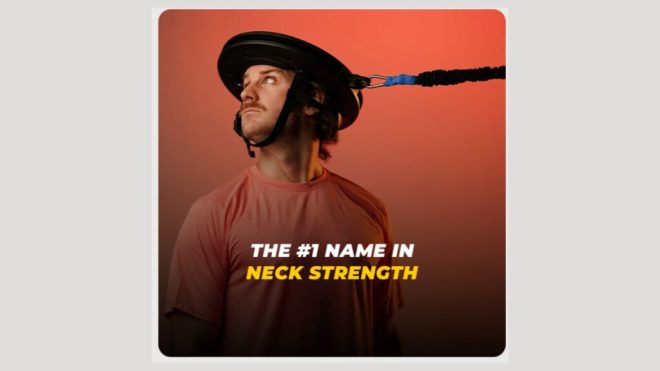
Using the Iron Neck gave me eye-opening benefits for my workstation ergonomics. Photo via iron-neck.com.
The product fits around the head like a hat would. Then, it has a strap that connects under the chin. It’s shaped like a halo. There is a track that goes all the way around it 360 degrees. There is a small device that slides around that track. This device is also connected to the Iron Neck.

The Iron Neck comes with a resistance band that hooks to the piece that slides around on the track. The other end of the resistance band can hook to a door or a pole.
It comes with a book that contains multiple exercises to do with the Iron Neck. To learn more, check out my full Iron Neck Review.
See this post for more neck posture exercises.
Yoga stick
This next product is not expensive. I got it from Amazon. It’s called a yoga stick.

This yoga stick stretch puts me in the exact counterbalanced position I need to be in, to reverse the damage that slouching forward does to me. It activates my back muscles in the opposite direction. And it also lengthens my chest muscles, which get shortened from sitting at a computer.
All of this corrects my slouching forward. So, I’m more likely to sit with an upright torso and a neutral spine (with its natural curves intact). And sitting in that healthy position was helped me have good computer posture.
Best sleeping position for forward head posture
No single position helped correct my forward head posture. But here’s a quick summary of what being in each position was like for me.
Flat on my back
Flat on my back is a pretty standard sleeping position for me. I just make sure my pillow is not too high. I want to maintain a healthy curve in my cervical spine. My slouching forward and forward head posture used to be so bad, my body would be stuck in that position constantly, even when I laid flat on my back. My pillow being too high would help force my torso back into the slouched position.
On my side (either one)
I’ve read about disadvantages of sleeping on each side. I won’t get into those. Because I make sure I rotate pretty evenly when it comes to sleeping on my right vs my left. I just make sure my pillow supports my head. Just like when sleeping on my back, I want to have a healthy curve in my cervical spine.
Because being in a poor posture for long periods of time causes repetitive strain and overuse, even when I’m sleeping!
Face Down
I don’t sleep face down for long. Because it’s a position that is the exact opposite of slouching forward. And it can get pretty intense, putting excessive strain on my postural muscles. That’s why I’ll only lay face down for 20 minutes or so, to catch a quick nap. I just make sure to have a pillow under my chest, not my head. Putting it under my head would cause me to turn my head in either direction. And holding that for any period of time can get dicey.
Yoga poses for forward head posture
Yoga cactus pose (while laying flat on the floor)
One of the most chronic issues I had from poor computer posture was excessive internal rotation of my shoulders. An average physical therapist would tell you to go do a door stretch, or a towel stretch. But those just didn’t move the needle for me.
I needed a stretch that was low-intensity and long-duration. Because we hold a keyboard and mouse 8 hours a day. This issue won’t get fixed with a 30 second stretch.
So I started doing a yoga cactus stretch, while laying flat on the floor. It reverses my internal shoulder rotation, while allowing me to relax, and focus on my breathing, for long periods of time.

Habits for forward head posture
Correct monitor height
I know I’ve mentioned this already. But it’s the most important habit for preventing forward head posture. Especially when it comes to workstation setup. And it’s a simple fix that only takes a few minutes.
I make sure the top of my monitor screen is even with my eye level. Anything lower will increase my risk of poor computer posture.
And if I’m working on a laptop, I plug in to an external monitor.
Correct monitor height is non-negotiable for me. I won’t work on a monitor if the top of the screen is below my eye level.
maintain a neutral spine at a computer
Regardless if I’m sitting or standing at my computer:
- I want to maintain a neutral, balanced spine.
- I don’t want to slouch forward.
- I also don’t want to overcorrect and have my spine too straight.
- I want the natural curves of my spine to be intact, especially when working on a computer for long periods of time.
All of these are good habits for preventing forward head posture.

How Long Does It Take To Correct Forward Head Posture
My case of forward head posture was severe. And it took me about 6 weeks of consistent practice (3 days a week) to fix my forward head posture. I used my Iron Neck, my yoga stick, and I did yoga cactus pose (while laying flat on the floor).
Since my case of FHP was severe, I can’t speak for the timeline of mild or moderate cases. But hopefully it would be shorter than 6 weeks (my experience).
Good luck! Small, healthy habits practiced consistently was the best way for me to improve posture at computer.
Us full-time computer users have been sitting at a computer for:
- 8 hours a day
- 40 hours a week
- 2,000 hours a year
Regardless of how effective the exercises are, correcting FHP is going to take time, patience, and consistent effort.

Thanks for your interest in computer posture.


Todd Bowen – Computer Posture Correction and Pain-Free Ergonomics: For Office Workers Who Want to Fix Their Sitting Pain
P.S. If you liked this article, you’ll love the digital store I just published.
🙏 Thank you for supporting my work. -Todd